By Dariusz Karpowicz
In the UK, we seem to have a national sport that rivals football or complaining about the rain: the race to be mortgage – free.
For decades, the ultimate financial flex has been the “mortgage burning party.” The logic is ingrained in us from a young age: debt is bad, owning your castle outright is good. It’s simple, safe, and sensible.
Or is it?
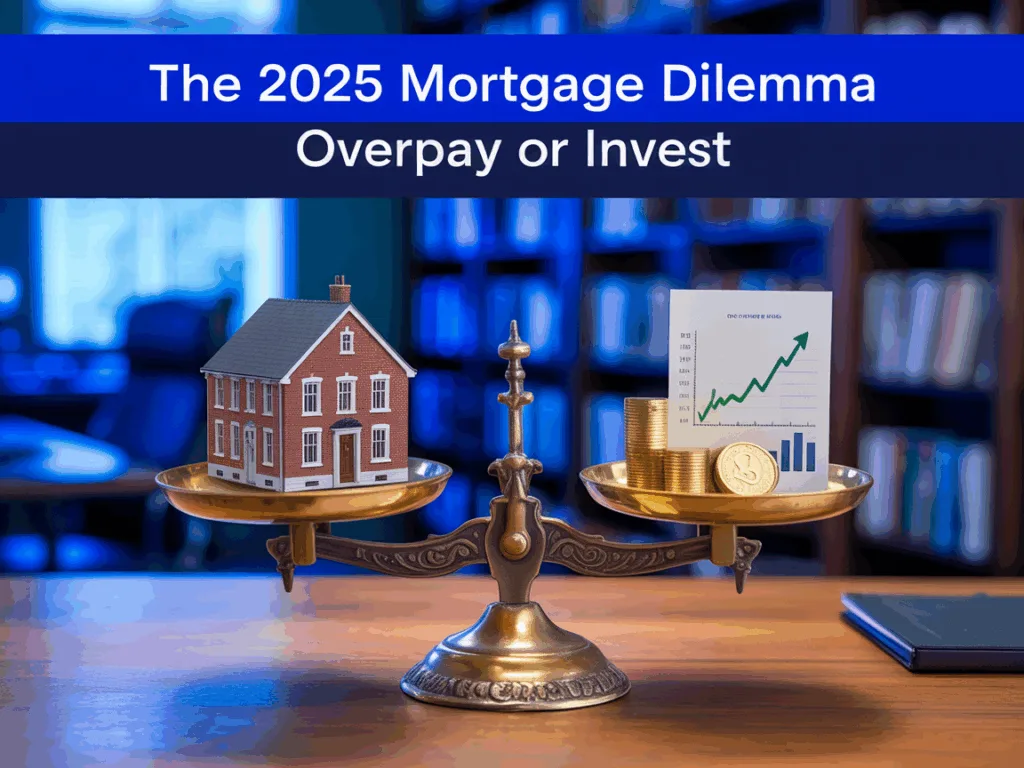
As a mortgage broker, my day job is usually helping people get into debt (responsibly!). But recently, I’ve been looking at the numbers for 2025, and I’m becoming convinced that the rush to clear that balance might actually be a strategic error. While the emotional pull of a zero balance is undeniable, the cold, hard maths often suggests that aggressively overpaying your mortgage could leave you with less wealth – and less security – in the long run.
Here are five reasons why I believe we need to flip the script on mortgage overpayments this year.
1. Cash is King (And Bricks Are Not)
This is the practical reality that worries me most when I see clients throwing every spare penny at their lender.
When you overpay your mortgage, you are converting liquid cash into property equity. The problem with equity? It’s incredibly difficult to spend. You cannot take a few bricks out of the front wall to pay for a new boiler, a car repair, or a sudden bill.
I call this the “Asset Rich, Cash Poor” trap.
Imagine life throws you a curveball in 2025 – loss of income, health issues, or a family emergency. If you have £50,000 sitting in a savings account or accessible investment (like an ISA), you have a safety net. You can pay your bills and keep the lights on. But if you used that £50,000 to reduce your mortgage balance? The bank won’t care how much equity you have; they still want next month’s payment. Overpaying locks your money in a vault you can’t easily open.
2. Don’t Let the Taxman Keep Your Bonus
This is where the “smart money” separates itself from the crowd, especially if you are a higher-rate taxpayer.
Most people overpay their mortgage using net income – money that has already been taxed. You earn it, the taxman takes his cut, and you give the rest to the bank.
However, if you redirected that same money into a pension, you would receive tax relief.
- Basic rate taxpayers get an immediate 20% top-up.
- Higher rate taxpayers get a massive 40% top-up.
Let’s look at the maths: For a higher earner, putting £1,000 into a pension effectively turns into around £1,666 in your retirement pot. To beat that with a mortgage overpayment, your interest rate would need to be astronomical. By ignoring these tax-efficient wrappers to pay down cheap debt, you are essentially volunteering to pay more tax than you need to.
3. The Opportunity Cost of Comfort
If your mortgage rate is around 4.5%, every pound you overpay saves you that 4.5% in interest. That’s your “return.” It’s guaranteed, which is nice, but is it enough?
We shouldn’t compare mortgage rates to savings accounts; we should compare them to long-term investing. Historically, global stock markets have returned significantly more than current mortgage rates over 10 or 15-year periods – often averaging between 7% and 10%.
By prioritizing a 4.5% debt clearance, you are saying “No” to potential 7%+ growth. This difference is called “opportunity cost.” Over a decade, the gap between saving 4.5% and earning 7% can amount to tens of thousands of pounds in lost wealth. Sometimes, the price of the comfort of being debt-free is actually quite high.
4. Locking Away Your Freedom
Life is rarely a straight line, and your goals in 2025 might look very different from your goals in 2035.
When you sink all your excess capital into your mortgage, you are betting everything on one outcome: owning that specific house. But what if you want to start a business in five years? What if you want to retire early? What if you want to help your children with a house deposit?
Money held in a diversified investment portfolio gives you options. It can be liquidated for any purpose – including paying off the mortgage later if you change your mind. Money overpaid into the mortgage has only one function: reducing debt. By holding onto your cash, you are buying yourself flexibility and freedom.
5. Why Debt Isn’t Always the Villain
This point is the most counter-intuitive, so bear with me. We are conditioned to hate inflation, but if you are a borrower, inflation is actually your secret ally.
Inflation erodes the “real” value of debt over time. A £200,000 mortgage feels like a huge mountain to climb today. But in 15 or 20 years, assuming normal inflation and wage growth, that £200,000 figure will represent a much smaller percentage of your purchasing power. The number stays the same, but the burden shrinks.
By rushing to pay off the debt now with today’s “valuable” money, you are denying yourself the benefit of letting inflation slowly eat away at the real value of that debt for you.
My Verdict
Let’s be clear: personal finance is personal. For some of you, the psychological relief of being debt-free is worth more than any investment return or tax break. If debt causes you genuine anxiety, overpaying is absolutely the right choice for your peace of mind.
But if you can look past the emotional desire to burn the mortgage deed, the numbers suggest that keeping your mortgage—and investing your cash instead—might just be the smarter path to wealth in 2025.
Important Disclaimers
Please read this carefully.
I, Dariusz Karpowicz, am a Mortgage and Protection Adviser, NOT a Pensions or Investment Adviser. The content of this article is intended for information and entertainment purposes only and does not constitute financial advice.
I am not authorised to give advice on pensions or investments. If you require advice in these areas, you should speak to a qualified Independent Financial Ad
Your home may be repossessed if you do not keep up repayments on your mortgage.
The value of investments and any income from them can fall as well as rise and you may not get back the original amount invested.
- Tax treatment depends on the individual circumstances of each client and may be subject to change in the future.
- I am not authorised to give advice on pensions or investments. If you require advice in these areas, you should speak to a qualified Independent Financial Adviser (IFA).
Albion Financial Advice is a trading style of Albion Financial Advice Services Ltd, which is authorised and regulated by the Financial Conduct Authority.